PAW & PLACE · PET CARE
Senior Dog & Cat Care Guide
Independent general education based on cited veterinary and animal-care sources. This is not an individual diagnosis or treatment plan; ask your veterinarian to adapt care to your pet. It is not an official AAHA guideline.
Everyday care for comfort, health and connection.
Evidence review: October 18, 2026. This independent owner guide draws on the 2023 AAHA senior-care framework and selected newer, topic-specific guidance. It is not an official “2026 AAHA Senior Care Guideline.” It offers general education, not an individual diagnosis or treatment plan. Ask your veterinarian to adapt care to your pet.
When does a pet become a senior?
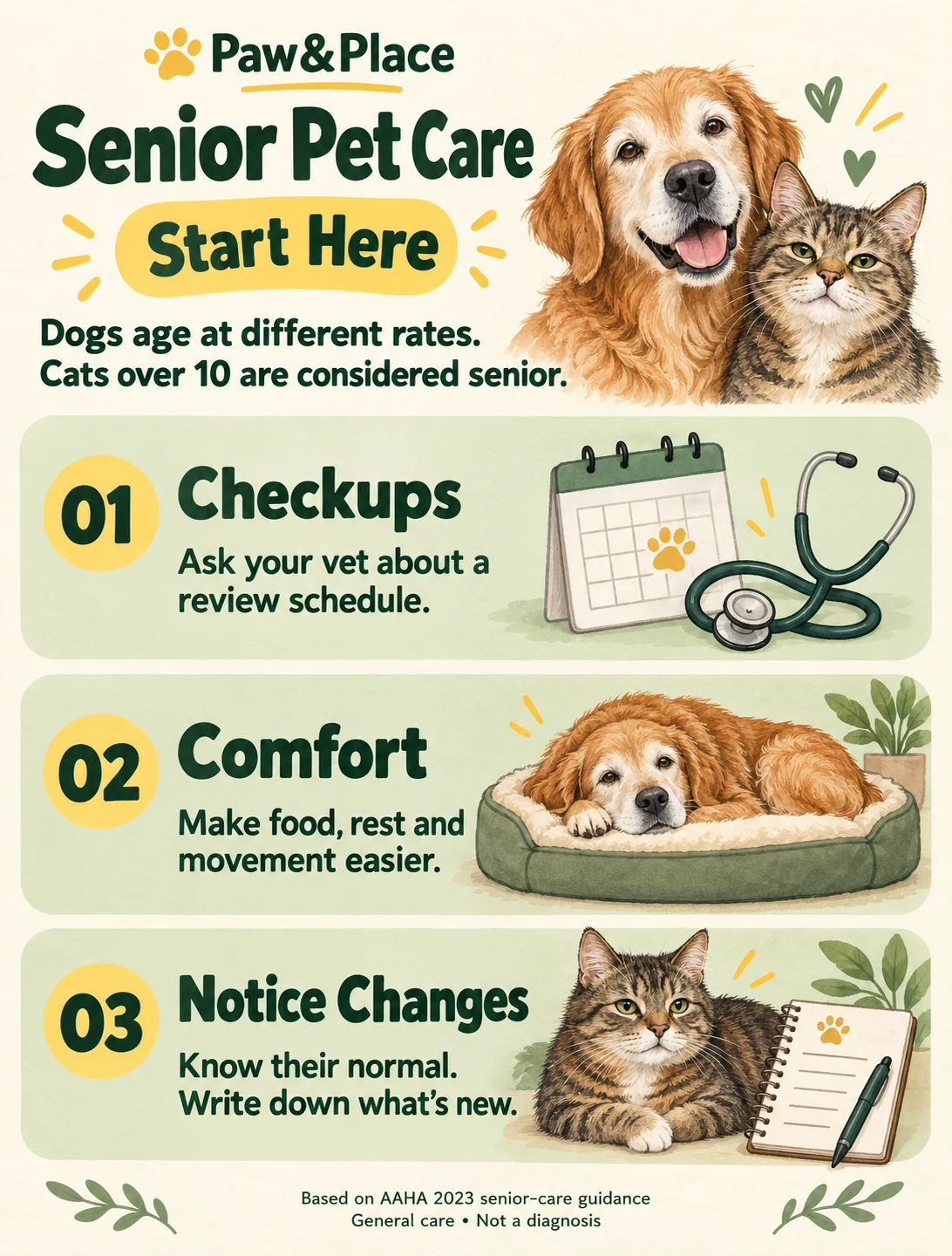
There is no single birthday that makes every dog and cat a senior. AAHA describes senior dogs as being in approximately the final quarter of their expected lifespan. Because size and breed influence lifespan, a large dog may need senior-focused care earlier than a small dog. The feline guidelines used by AAHA define senior cats as older than ten years.
These categories help start a conversation; they do not tell you how well an individual pet is doing. Ask about your pet’s strength, comfort, weight, senses and everyday abilities. An active older cat still benefits from preventive care, while a younger dog with chronic illness may already need extra support.
The practical goal is to notice changes early and preserve the activities your pet enjoys. Make a short baseline record now: favorite games, usual sleeping pattern, appetite, walking route and comfortable resting places. For a closer look at feline life stages and everyday observations, see our senior cat care article.
Source: AAHA, 2023 Senior Care Guidelines, “Defining the Senior Patient” (web publication December 2022): AAHA senior patient definition
Build a veterinary checkup plan
Agree on a review schedule before a problem becomes urgent. Ask whether six-monthly visits suit your pet and whether existing conditions or medications require closer monitoring.
A senior assessment should extend beyond a quick weight check. Discuss the mouth, movement, body condition, muscle, skin and lumps, heart and breathing, and any changes you have noticed. Testing should reflect your pet’s history, examination, risks and previous results.
AAHA’s senior-care table recommends blood counts, blood chemistry and urinalysis every six to twelve months, with other tests selected for the patient. Blood pressure and thyroid assessment deserve particular discussion in older cats. Imaging is guided by clinical indications rather than automatically ordered for every senior.
Ask three questions: What are we looking for? How would the result change care? When should we repeat it? Also review vaccination and parasite prevention with your veterinarian instead of assuming these stop with age.
Source: AAHA, 2023, “Diagnostic Tests and Recommended Frequencies”: recommended senior-pet tests
Feed the individual, and watch muscle as well as weight
A food labelled “senior” is not a complete feeding plan. Energy needs, appetite, digestion and medical conditions differ. Older dogs often need fewer calories, while some older cats struggle to maintain weight and may need more energy or more digestible food.
Ask your veterinary team to assess both body condition, which considers fat, and muscle condition. A pet can carry excess fat while losing muscle. Record unexpected weight changes and appetite changes instead of treating them as inevitable aging.
Choose a complete and balanced diet appropriate for your pet’s needs. Do not restrict protein simply because a pet has reached a certain age. If kidney disease or another condition is diagnosed, discuss a disease-specific nutrition plan with the veterinarian. Multiple illnesses may require balancing competing dietary priorities.
Source: AAHA, 2023, “Nutrition”: senior-pet nutrition guidance
Make eating and drinking easy to manage
Keep a written record of the actual food, portions, treats and supplements your pet receives. Include food used to hide tablets. Small extras can make a meaningful difference to calorie intake and nutritional balance.
Unexplained weight change, loss of muscle or an unusual diet deserves a fuller nutrition assessment. A home-prepared diet needs professional formulation; a collection of wholesome ingredients does not automatically meet nutritional requirements.
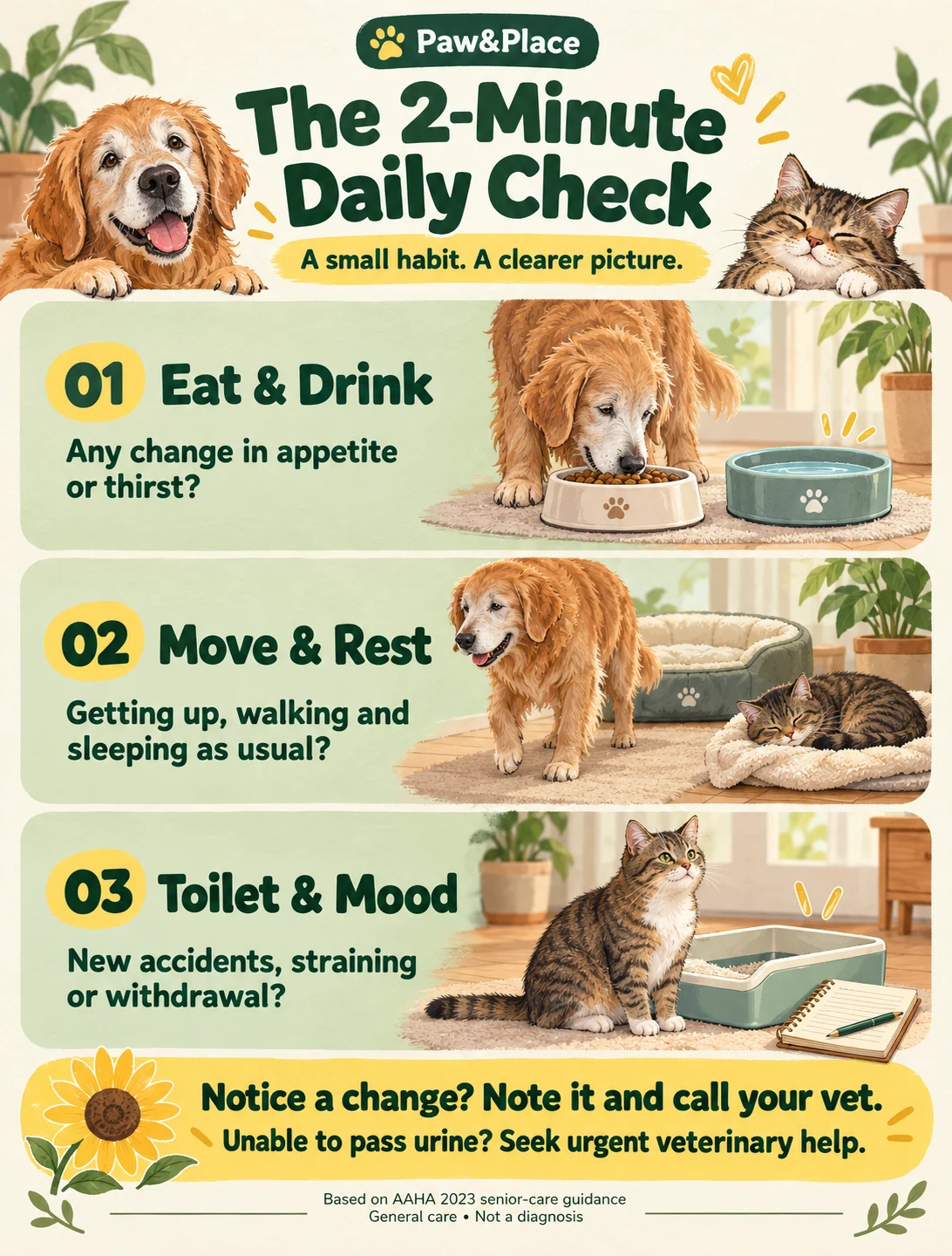
Put fresh water and meals somewhere your pet can comfortably reach. For cats, several quiet, accessible locations may be useful. If intake changes, note whether the problem seems to be appetite, reaching the bowl, chewing or sharing space with another animal. Report a persistent increase in thirst or urination rather than simply moving to a bigger bowl.
If an older cat is eating less or stops eating, contact a veterinarian promptly; our senior cat appetite guide covers what to note while arranging advice.
Sources: AAHA, 2021, “Nutritional Risk Factors”: nutrition and weight-management guidelines · ISFM/AAFP, 2024 NSAID guidelines, home-environment section: feline pain and home-environment guidance
Keep movement comfortable
Changes in movement can be signs of pain. A dog may take longer to rise, hesitate on stairs or stop earlier on walks. A cat may choose lower resting spots, hesitate before jumping or change how it moves around the house. Record short videos of ordinary movement for your veterinarian; do not make your pet repeat a painful activity for the camera.
Discuss an exercise plan that matches current ability. Comfortable, manageable activity and appropriate rehabilitation may help preserve mobility. Ask for guidance before starting a new exercise program or increasing its intensity.
Pain management often combines several approaches, such as prescribed treatment, weight management, rehabilitation and changes at home. Arrange a follow-up so you can judge whether daily life is improving. A useful goal is specific: reaching the garden comfortably, settling to sleep, or getting to a favorite resting place.
Source: AAHA, 2023, “Pain Management”: senior-pet pain management
Make the home easier to navigate
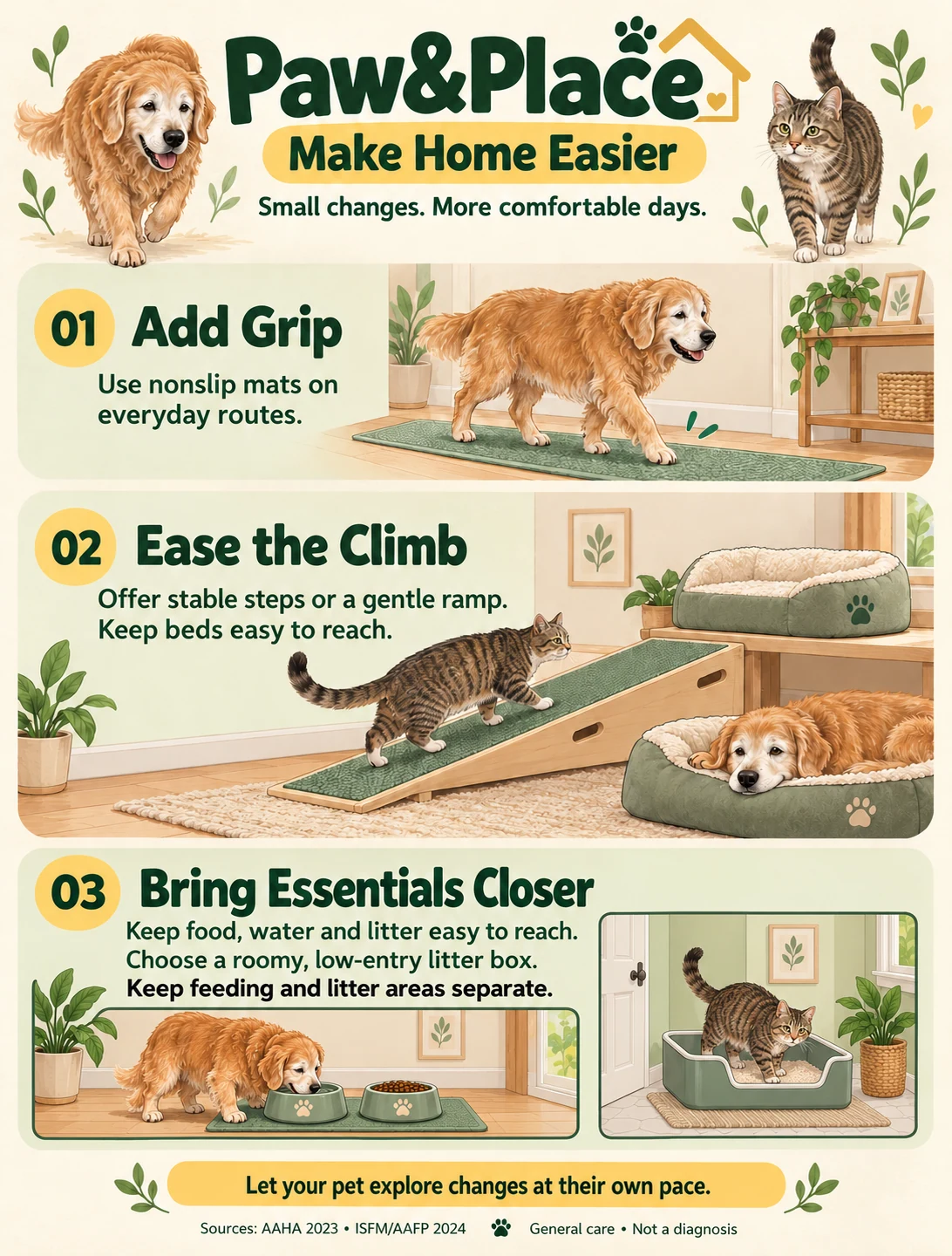
Walk through the home from your pet’s height. Look for slippery routes, awkward steps, blocked resources and places where another animal can corner them.
For cats with mobility problems, stable steps or ramps can preserve access to favorite places. Use roomy litter boxes with a low entrance and place them where they are easy to reach. Nonslip surfaces can make travel between resources safer. Check whether your cat can still groom comfortably, and offer gentle help when needed. Monitor nail care as well.
Keep resting areas comfortable and accessible. Introduce changes gradually so your pet can explore without pressure. The aim is to maintain useful choices, including quiet retreat and access to familiar people, rather than unnecessarily restricting the pet to a single spot. See our room-by-room senior-pet home checklist or guide to comparing ramps and stairs for practical layout checks.
Source: ISFM/AAFP, 2024 consensus guidelines, home modifications and caregiver resources: feline home-environment guidance
Give dental care its own place in the routine
Oral disease can cause pain and infection. Include the mouth in veterinary examinations, and report changes such as difficulty eating or concern about a tooth rather than waiting for the next routine visit.
The 2026 WSAVA dental guidelines support daily toothbrushing as the most effective home plaque-control method. Ask the team to demonstrate a comfortable introduction and check whether existing disease needs treatment before brushing. Home care supports professional dentistry; it cannot assess everything below the gumline.
Anesthesia-free cleaning does not provide comprehensive dental care. If anesthesia worries you, ask how your pet’s health will be assessed, how pain will be controlled and how monitoring will work. Age alone does not settle the decision. Your veterinary team should explain the benefits and risks for this particular pet.
Sources: WSAVA Global Dental Guidelines, September 2, 2026: 2026 WSAVA dental guidelines · AVMA, “When your pet needs anesthesia,” accessed October 18, 2026: AVMA anesthesia guidance
Notice changes in sleep, behavior and senses
Nighttime restlessness, getting lost in familiar rooms, new toileting accidents, changed social interaction or increased anxiety deserve attention. Cats may also become more vocal. Keep notes about when the change began, how often it happens and what else has changed.
Cognitive dysfunction is one possible explanation, but pain, organ disease and other conditions can produce similar signs. A veterinary assessment helps avoid missing a treatable problem. Sudden or severe changes should not wait for a routine cognitive check.
New canine cognitive-dysfunction guidance, published online in December 2025 and in print in April 2026, proposes standardized assessment and severity stages. Its practical message for owners is to share observations and follow changes over time. A questionnaire can support the consultation; it cannot diagnose your dog on its own.
Sources: AAHA, 2023, “Managing Cognitive Dysfunction and Behavioral Anxiety”: senior-pet behavior guidance · CCDS Working Group abstract and publication dates: canine cognitive dysfunction consensus statement
Protect companionship, choice and enjoyable activity
Keep offering chances to engage, with activities suited to comfort and interest. This might mean an easy food puzzle, a short sniffing outing or a gentle play session that does not demand a high jump. Let your pet pause or leave.
For cats, accessible safe places, separate resources and predictable, positive interactions help meet behavioral needs. If another pet monopolizes a resting area or feeding station, adjust the arrangement. Notice whether a previously sociable pet is withdrawing and mention this to the veterinarian.
Use a simple question to guide the day: What does my pet still choose to do, and how can I make that easier? Preserve familiar routines where they help, while allowing more rest and adapting activities as needs change. For more ideas, see our guide to gentle enrichment and companionship.
Sources: FelineVMA, 2024 Chronic Pain Educational Toolkit: chronic-pain caregiver resources · AAHA, 2023 cognitive and behavior guidance, linked above.
Keep medicines and supplements organized
Bring an up-to-date list of everything your pet receives, including prescriptions, over-the-counter products, supplements, oils and creams. “Natural” does not guarantee safety, and combinations can cause harmful interactions.
Ask for written directions and a clear plan for missed doses, vomiting, reduced appetite or suspected side effects. Never share another animal’s medicine or add human pain medication without veterinary direction. Do not change prescribed treatment based on an online post.
If several people provide care, use one medication log to reduce missed or repeated doses. Tell every treating clinic about current medicines. For example, the 2026 feline diabetes guidelines stress that owners should tell emergency teams when a cat receives an SGLT2 inhibitor, because monitoring and potential complications differ from insulin treatment.
Sources: AAHA, 2023, “Evaluating the Healthy Senior Pet”: healthy senior-pet evaluation · AAHA feline diabetes client education, April 26, 2026: 2026 cat diabetes guidance
Plan for quality of life and caregiver capacity
Tell the veterinary team what is realistically manageable: lifting, transport, medication schedules, disrupted sleep and cost. Ask which steps matter most and whether an easier approach can meet the same goal. A backup caregiver and a written routine can help when you need rest or are away.
Track your pet’s comfort, appetite, mobility, rest and interest in familiar activities. A calendar can reveal whether difficult days are becoming more frequent. Discuss patterns with your veterinarian rather than using a single online score to make a major decision; many quality-of-life scales have not been validated.
When illness progresses, ask about comfort-focused care, what deterioration may look like and whom to call after hours. Discussing these choices early gives you time to think and helps the whole household understand the plan.
Sources: AAHA, 2023, “Managing the Caregiver Burden”: caregiver support guidance · “Tools for End-of-Life Care”: quality-of-life and end-of-life tools
Know when to seek help
Seek emergency veterinary advice immediately for difficulty breathing, collapse or loss of consciousness, major trauma, uncontrolled bleeding, ongoing seizures, suspected poisoning, or inability to pass urine. Repeated straining with little or no urine is especially concerning. This list is not exhaustive: call if the change is severe or you are unsure.
Contact your regular veterinarian promptly about reduced eating, repeated vomiting, unexplained weight loss, increased thirst or urination, new lumps, worsening movement or behavior changes. Tell them about existing illnesses and medicines so they can judge urgency.
Keep the nearest emergency hospital’s number and address accessible. Call ahead when possible. Do not give extra medication or induce vomiting unless a veterinary professional specifically instructs you.
Sources: AAHA, “Help! Is This a Pet Emergency?”, accessed October 18, 2026: AAHA emergency guide · Merck Veterinary Manual, “Evaluation and Initial Treatment of Dog and Cat Emergencies,” accessed October 18, 2026: Merck emergency guidance · AVMA Pet First Aid brochure, 2023: AVMA first aid brochure
A routine you can actually use
These practical prompts organize the guidance above; they are not a diagnostic scoring system.
Every day
- Notice appetite, water intake, toileting, comfort and interest in company.
- Offer suitable activity, accessible resources and undisturbed rest.
- Give prescribed care and record medicines in one shared log.
- Check for a change that needs veterinary advice.
Each week
- Review notes for patterns instead of relying on memory.
- Check bedding, walking routes, litter access, coat and nails.
- Review food portions and medication supplies.
- Record weight at the interval your veterinary team recommends.
Before a veterinary visit
- Bring your food and medication list, questions and relevant videos.
- Choose the three changes that concern you most.
- Ask about pain, teeth, weight, muscle and appropriate screening.
- Leave with the next review date and clear instructions for deterioration.
Quick questions
Does every senior pet need a new food?
No. Review the current diet, body condition, muscle and health first. A medical condition may change the recommendation.
Should I stop exercise when my pet slows down?
Ask why movement has changed. Your veterinarian can help adapt activity and address discomfort rather than leaving the decision to age alone.
Can a pet be too old for dental treatment?
Overall health, the procedure and the anesthetic plan matter. Discuss individual benefits and risks instead of using age as the only deciding factor.
Is nighttime crying always dementia?
No. Record the pattern and arrange an assessment for possible pain, illness or cognitive changes.
What should I start with today?
Write down your pet’s normal routine, make one difficult daily activity easier, and arrange any overdue veterinary review. Small, consistent observations make the next conversation more useful.
More senior-pet reading
- Senior cat care: life stages and everyday changes
- Senior cat not eating: what to do
- A room-by-room home setup checklist
- Gentle enrichment and companionship
For cats, our free Cat Pain Check lists the five Feline Grimace Scale facial signs and common behaviour signs of pain, with a summary you can bring to a checkup.